


Shoplifting is a problem in the retail sector that can take on huge proportions depending on the industry. Shoplifters like to strike especially in shops where many small but relatively expensive products are sold.
It is not only the shop owners who lose out on potential sales and the value of goods. According to a study by the Cologne Retail Research Institute (EHI), shoplifting also results in VAT losses of around 500 million euros per year.
In the following, we clarify the most important points relating to shoplifting and give you valuable advice on how you can minimise the potential danger and effectively prevent shoplifting.
If you want to catch the thieves, you should first consider which goods are particularly popular with thieves. As already mentioned, most thieves focus on smaller products that are easy to smuggle out from under clothing.
These include, among others:
Drugstores and larger department stores in particular are often the victims of thieves, as it is difficult to monitor the entire shop closely. If a thief slips something under a jumper in a corner of the shop, it is very difficult for employees to notice.
Preventing shoplifting is so difficult because many thieves behave inconspicuously to the untrained eye. Experienced thieves put the stolen goods in their rucksack in a blind spot in the shop or let them slip into their trouser pocket. However, many thefts are committed by opportunist thieves - the theft is spontaneous and often not planned beforehand. These people also do not behave conspicuously at first, as the decision to steal is only made later.
A particularly brazen strategy that is difficult to catch is the so-called “running”. This portmanteau word (buy & steal) describes the behaviour of thieves who pay for part of the purchase as normal, but do not put some of the goods on the conveyor belt and smuggle them out unnoticed. If they are caught, they like to play the innocent and claim that they naturally wanted to pay for the goods that were taken out of sight.
Some shoplifters also commit their crimes in groups. Particularly in shops where more expensive goods are better secured or where there are generally more employees, some people play the decoy and distract shop assistants. The accomplice uses the undisturbed moment to steal the coveted goods.
Particularly nasty: shoplifters use internet forums and closed messenger groups to share their latest strategies and also give recommendations on which goods are currently very easy to steal.
However, retailers do have opportunities to actively prevent shoplifting or at least greatly reduce it. As already mentioned, most thieves are first-time offenders and therefore often have no tricks up their sleeves, are very clumsy in their approach and are therefore often easy to recognise even for laypersons.
Proper shop detectives read people's body language and can quickly identify even experienced shoplifters. It is important to look out for certain characteristics that may be an indication of planned shoplifting:
What is barely visible to laypeople, experienced shop detectives notice immediately. This is why investing in a shop detective is often the most effective method of combating theft.
There are a number of measures you can take to prevent shoplifting. Many approaches have a preventative effect and primarily serve as a deterrent. If potential thieves have the feeling that they are under observation, the inhibition threshold for committing an offence increases significantly.
The following measures have proven to be helpful in preventing shoplifting:
In addition to optimising the visibility of the shop area, you can also deter potential thieves from stealing by securing goods or packaging. For particularly expensive products, locking them in display cases or attaching them to the counter has proven to be the safest method in practice. The latter is often used for electrical goods such as mobile phones and cameras to give customers the opportunity to try out the goods.
In particular, items that can be transported inconspicuously but have a relatively high value (e.g. video games) should have additional article surveillance. On the other hand, no-one is likely to let an expensive television set be taken just like that; large items therefore often do not need special article surveillance. For valuable small items, such as smartphones and accessories, as well as other electrical items, it has also proven to be a good idea to attach the products to the sales stand. If the connection is broken, an alarm signal sounds so that a thief will not be successful in his attempt.
In many shops, the use of RFID tags to secure goods, which are only removed at the checkout, has also proved successful. If someone tries to leave the shop with stolen goods, a beep sounds and shop staff can intervene. However, attaching RFID tags is no longer practical for a very large range of goods, as not every small item can be secured in this way.
Clothing can also be secured with so-called hard labels. This is a two-part merchandise security tag that is magnetically connected to each other and is only removed at the checkout. If this is removed improperly, a fragrance or dye is released, rendering the goods unusable.
It is generally advisable for labels to be labelled with the name of the shop and a company code. In contrast to pure price labels, which offer no further information about the origin, this has the advantage that the stolen goods can be traced if they are recovered after a theft.
In addition to the theft prevention approaches already mentioned, there are also numerous options for electronic anti-theft devices. A distinction can be made here between monitoring devices and alarm devices.
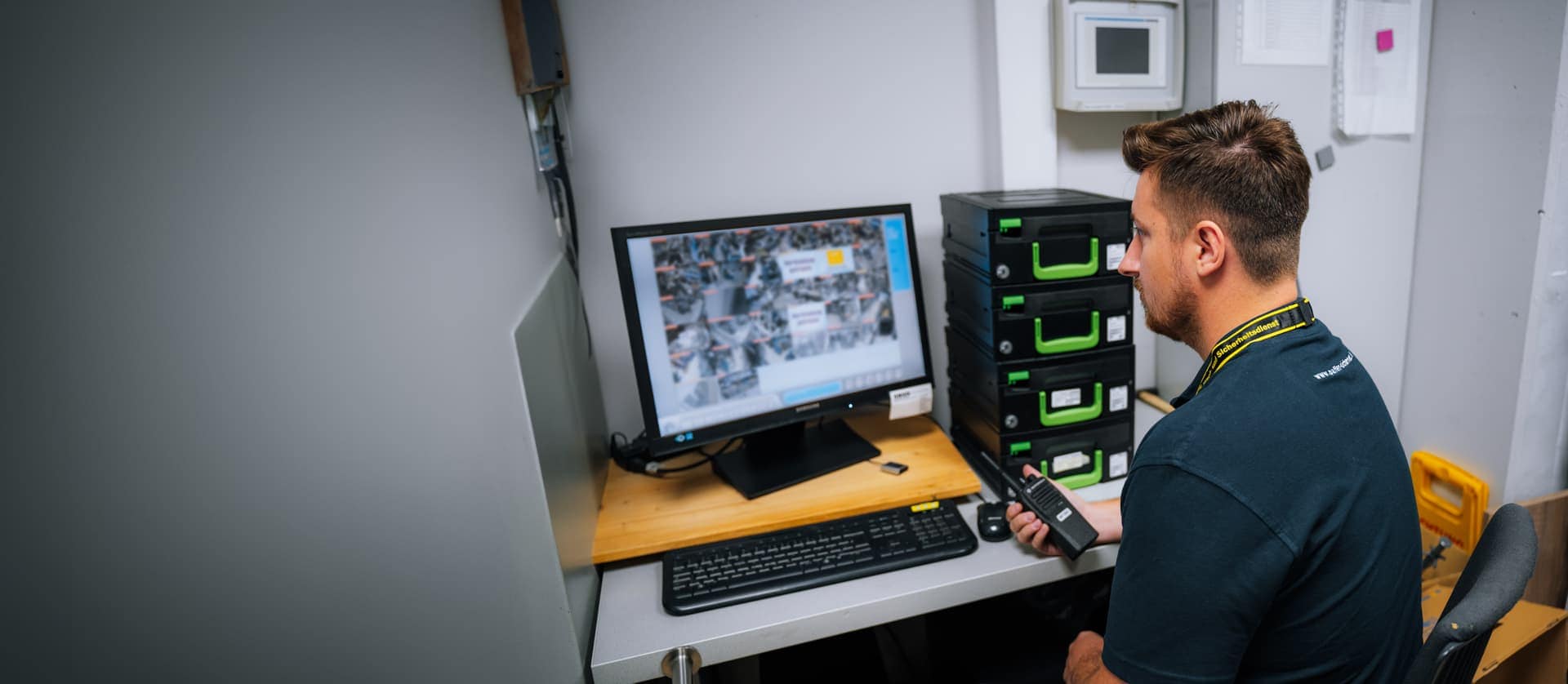
The surveillance devices are typically cameras that ideally cover the entire shop area. When installing them, make sure that there are as few blind spots as possible. On the one hand, video surveillance cameras are a deterrent, but on the other hand, they are also a means of catching perpetrators after the fact or, for example, determining whether people who are banned from the premises have been in the shop. A more favourable option is the installation of dummy cameras equipped with flashing diodes. This tool often achieves the desired effect.
Electronic access control (possibly with an alarm signal) is recommended for the warehouse to prevent unauthorised access. For shelves with display areas for electronic devices, it is advisable to wire the display items and secure them with an alarm.
Large shops often rely on an alarm system with remote monitoring and connection to an emergency call and service control centre to provide professional support in the fight against shoplifters and robberies.
Shoplifters often give themselves away through their behaviour, gestures and facial expressions. This is usually easily recognisable for well-trained staff. However, mirrors and cameras are useless if no employee feels responsible for surveillance. You should therefore clarify responsibilities very precisely. Do your employees even have the capacity to monitor potential shoplifters? Do they have the necessary skills?
Our recommendation is therefore: Use professional Shop detectives who understand their profession and, thanks to their experience, know exactly how shoplifters behave. Professional shop detectives work unobtrusively and discreetly. This means that normal customers do not feel observed or harassed.
Alternatively, a person recognisable as a security employee Doorman at the entrance to a shop acts as a deterrent to thieves - and gives employees and customers a feeling of security.
Have you or one of your employees caught a thief in the act? Then you have the right to initially arrest the criminal and prevent them from escaping. However, this type of „everyman arrest“ presupposes that the theft was actually witnessed and can be attested to. A bag check should already be carried out during this provisional arrest. This makes it possible to check whether the suspicion is substantiated.
If stolen goods are found during the inspection, the managing director must be informed. Only the manager can file a criminal complaint. If employees feel threatened, the police can be contacted beforehand if necessary. This applies in particular to cases in which the thief reacts aggressively.
Anyone who has stolen once will do it again. You should therefore ban the person from the premises immediately. This will make the person liable to prosecution for trespassing if they enter the shop again. The special feature here is that shoplifting is an offence, not a crime. Trespassing, on the other hand, is a criminal offence and the deterrent effect is much greater.
From a purely legal point of view, shoplifting already occurs when the goods are inserted or concealed. In the case of shoplifting, the German Criminal Code (§242 StGB) applies.
The penalty for shoplifting is usually rather low. A fine is appropriate for minor offences. However, prison sentences of up to 5 years can also be imposed. However, the severity of the shoplifting offence must be extremely high. Ultimately, it is all a question of the court's discretion.
You do not have to report the shoplifter immediately. In the case of low-value goods (up to €50), there is a period of 3 months. You should also ask yourself whether it is not enough to ban the shoplifter from the store. For some people, however, it may be a matter of principle that every theft is reported to the police.
There is no longer a time limit for reporting the theft of valuable items worth €50 or more. However, the longer you wait, the more difficult it may be to provide evidence, so it is not advisable to allow too much time to pass.
Insurers make a precise distinction between burglary and shoplifting. Burglary is, for example, a break-in at night in which a warehouse is ransacked. You can insure yourself against the resulting damage.
Shoplifting during the normal opening hours of a shop on the sales floor, on the other hand, cannot usually be secured. It is therefore all the more important to take preventative measures and minimise the likelihood of shoplifting.
The best way to achieve this is by combining all the options available to prevent shoplifting: Tools such as mirrors, cameras & alarm systems and trained staff who can catch the perpetrators in the act and approach suspects early on to prevent a crime from being committed.
Do you have questions about security in your shop? We will be happy to advise you and provide experienced shop detectives and doormen in the area. Cologne, Bonn, Koblenz and Düsseldorf available!