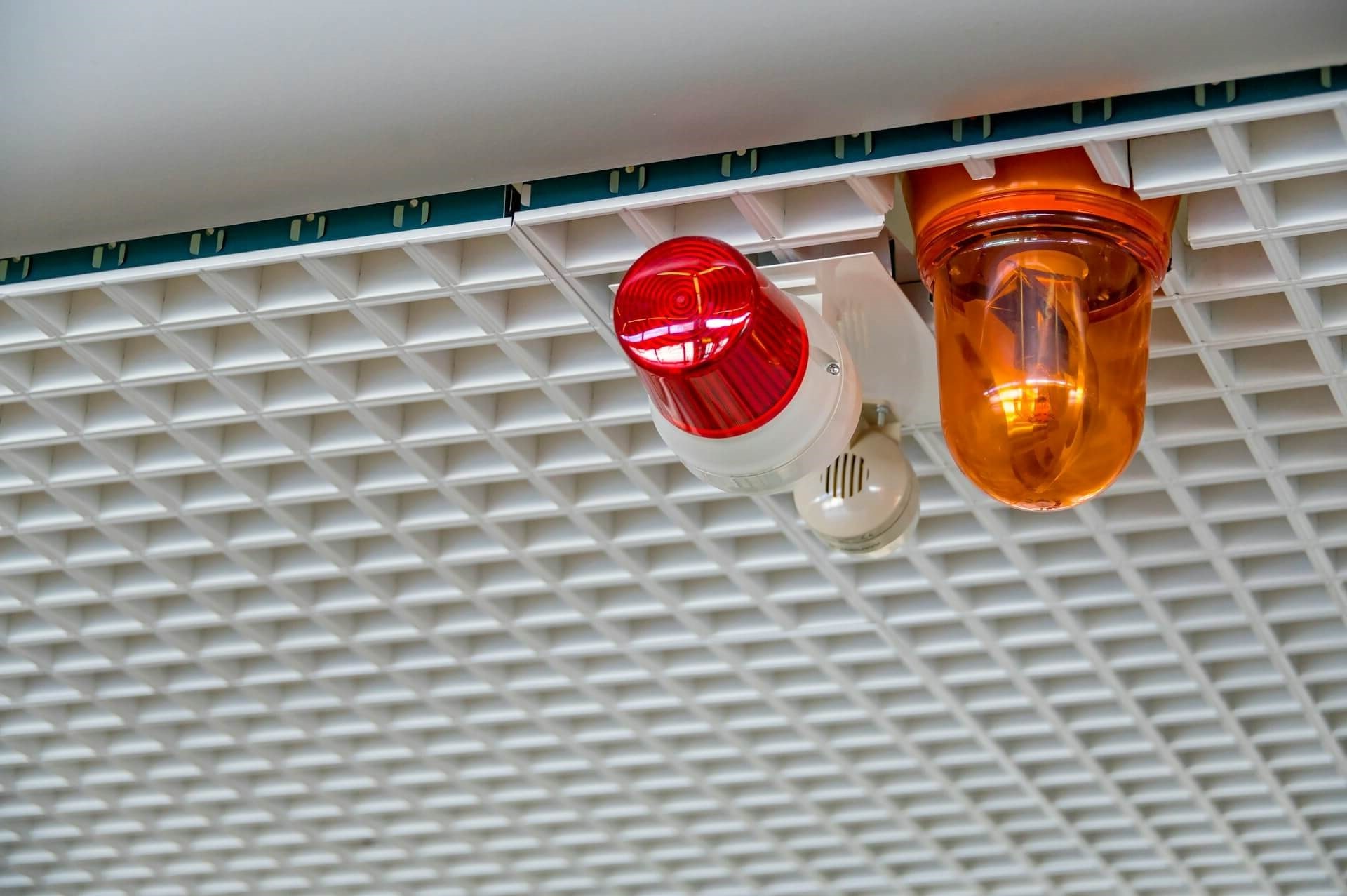
Alarm centre - the command centre for emergencies! All the threads come together in the alarm centre. This is the operations control centre. It consists of the monitoring and control unit. It ensures rapid action in an emergency. This could be a robbery, a burglary, a fire or a technical fault. This is where all the information comes together and is analysed.
Incoming emergency calls are first analysed in detail. What exactly has happened, where, how, when and which people are involved. This determines the further procedure and which emergency service, rescue, fire brigade, technical relief organisation or police, needs to be deployed. If several services are involved, the control centre takes over the coordination. The control centre is always equipped with a telephone and radio. The control centre also has an additional emergency power supply system to maintain the power supply in the event of a disaster. The telephone is usually connected to a different circuit to the rest of the supply system.
The control centre must proceed strictly according to a predefined alarm plan. Firstly, the alarm is pre-checked. The incoming emergency call is queried and recorded on the computer via the operations control system. This is followed by prioritisation of how urgent the emergency is. A decision is then made on the resources to be deployed. These are set out in the alarm and response order (AAO). Compliance with the response time is very important. This specifies how quickly the emergency services must arrive at the scene. The respective service is then alerted via radio, siren, etc. This can be done by telephone, alarm fax, SMS or radio data transmission. After transmitting the deployment order, the emergency services report to the control centre and receive the deployment orders. They are also informed in detail about the essential facts. The control centre receives continuous feedback from the emergency services about the situation on site and, if necessary, dispatches additional resources or services to the scene (helicopter, more ambulances, hazardous goods specialists, etc.). In addition, the operations centre often also performs the tasks of a poison information centre. The control centre must always ensure that there are still enough reserve personnel available for other emergencies despite a large-scale operation. In the event of major incidents, the population is also informed and warned via traffic reports, radio announcements, etc. Every deployment must be documented in accordance with precise specifications.
For cost reasons, in northern and eastern Germany in particular, not only the fire and rescue services but also a district's civil protection services are combined in an „integrated regional control centre“. These must then also take over the tasks for several regional authorities. In addition, there are also the „Cooperative Regional Control Centres“ (KRLS). In addition to non-police emergency response, these centres also house the police. Many alarm systems are linked to either the police or the emergency rescue service. As there have been more and more break-ins in recent years, this is already common practice in many areas. The alarm plan also specifies the exact actions to be taken. The preliminary alarm check also includes so-called „technical false alarms“. There are five cooperative regional control centres in Lower Saxony. In rural areas, it is often the case that the fire brigade control centres are not always manned. The police operations centre (PEZ) then takes over these tasks. Non-police operations centres provide additional protection in an emergency and are certified by the state. They support the state emergency services in an emergency or report emergencies and intervene quickly. In this way, disasters can often be prevented during the operation. The employees at the centre undergo continuous specialist training and are state-certified. All plans and operations are carried out strictly in accordance with regulations and technical, legal and medical requirements. The non-police control centres and their employees are also subject to regular checks and inspections. The same applies to the equipment, devices, systems and vehicles. The alarm plans are always updated, as are the computer systems. The technical equipment is always state of the art.
The alarm control centre, also known as the control room, is the monitoring and control unit of a hazard alarm system. It is used in particular for firefighting, raids, fault reports and break-ins, as all information is collected and analysed in the control centre.
We from Paffen Security service take care of your Object protection and Site security.
Paffen Sicherheitsdienst offers you all security services from a single source.
We would be happy to create a customised security concept for you!